
01 / Experience
A physical source for unpredictable numbers.
Random Generator places a mineral, a detector and a numerical display within a small glass-covered apparatus. It measures radioactive decay in naturally occurring allanite and uses the detected events as the starting point for generating numbers.
The work connects a physical process to computational experimentation. Patterns, movements and sounds can be built from its output, but the individual decay events are not scheduled by the program.
- Year
- 2016
- My contribution
- Concept, hardware, software and sound
- Homepage contribution summary
- Concept, hardware & sound
- Artistic authorship
- Verena Bachl & Karsten Schuhl
- Context
- independent artistic research collaboration
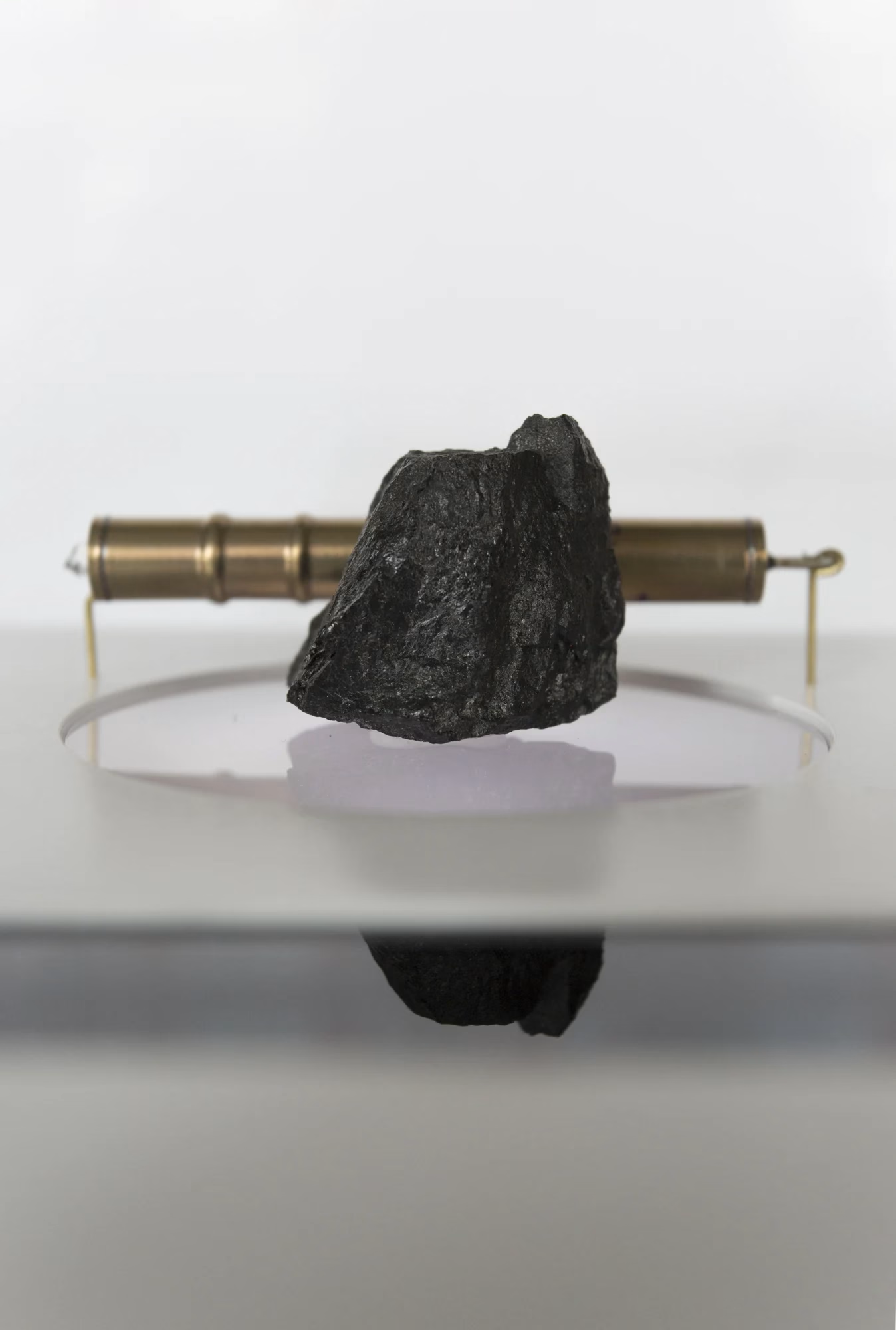
The allanite specimen and detector within the apparatus. Photograph: Verena Bachl.
02 / My contribution
Connecting matter to code.
I developed the work with Verena Bachl. The project involves creative direction, visuals, hardware design, production and code; the broader development also involved shared conceptual and technical work.
The object makes the source of the numbers visible rather than hiding it behind a software interface.
03 / Principle
From an event to a numerical sequence.
Radioactive decay can be described statistically across a quantity of material, while the timing of an individual event is not predictable in the same way. Random Generator works with this distinction between a measurable process and an unpredictable occurrence.
The development diagram follows that transformation from mineral and detected events to a binary sequence. It explains the conceptual chain without requiring the visitor to see the electronics inside the object.

Diagram tracing the transformation from physical events to numerical output.
04 / Exploration
What can a stream of numbers become?
The accompanying studies present the output in different visual forms: a sequence of digits, a black-and-white field and a drawing made from many overlapping lines. Each uses a different visual rule to turn random numerical data into an image.
These studies distinguish the source of randomness from the system that gives it a form. The apparatus supplies events and numbers; the subsequent mapping determines what can be seen or heard.

Numerical output presented as a sequence.

A binary visual study.
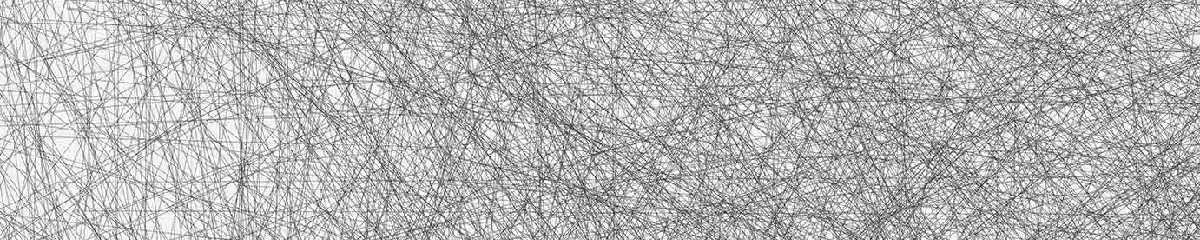
A line-based study using numerical input.
05 / Object & documentation
Making the process observable.
Acrylic glass, glass, painted wood and electronics form a compact object measuring approximately 30 by 30 by 20 centimetres. The visible mineral and display bring the physical source and computed output into the same field of view.
Developed in 2016, the apparatus was presented as part of Shrine for Dancing Spirits at Weißensee Academy of Art Berlin. The short documentation clip records the apparatus’s operation and the numbers it collects.